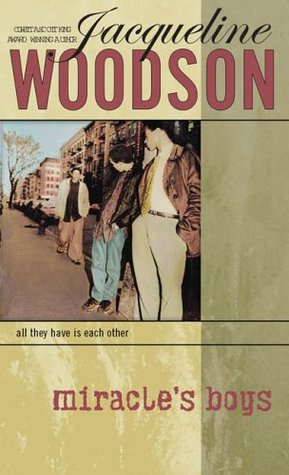
Miracle’s Boys By: Jacqueline Woodson — December 10, 2018

Miracle’s Boys By: Jacqueline Woodson

MIRACLE’S BOYS BY: JACQUELINE WOODSON

Bibliographic Information:

Author: Jacqueline Woodson

Title: Miracle’s Boys

Publisher: Penguin Group

Copyright: 2000

ISBN: 9780142415535

Summary: Miracle’s Boys is a story about three brothers who are orphaned and struggling to make it in the world. Lafayette, who is twelve years old, narrates the book which takes place over a two-day period (Friday and Saturday) however the book also flashes back in time as well. Miracle, the boys’ mother, died of an adverse reaction to insulin which put her in a coma. The boys’ father died of hypothermia after saving a woman and her dog from a freezing lake in central park years before. Twenty-two-year-old Tyree is the caretaker of the three, he gave up a scholarship to MIT in order to take care of his brothers. Fifteen year old Charlie, who has spent the last two years in a juvenile detention center for armed robbery, finally comes back home to live with Lafayette and Tyree. Before Charlie went to the juvenile detention center, he was a different person and had a close bond with Lafayette. The three brothers struggle to regain their once unbreakable bond because at the end of the day all they really have is each other.

Critical Evaluation: The author deals with heavy content in this story that is very realistic and similar to sometimes circumstances that happen in real life. The boys’ mother and father died so the eldest Tyree has to take care of his younger siblings. The middle child Charlie goes to a juvenile detention center and comes out a different person. While I feel that this is a good book, I also feel that the author tried to cover too many different issues at once: being orphans, grief, a young person in a juvenile detention center, a sibling sacrificing their life dream for siblings etc. These various themes and situations are so extreme that as a reader I began to focus on the circumstances more than the actual characters. I feel that the author didn’t make the right choice making the book last over the duration of two days. It made the story feel rushed, and the ending felt very abrupt and it probably could’ve had a smoother ending. Even though the duration of the book was two days, there were circumstances that were discussed years prior to the current Friday/Saturday setting. So it was pointless to try to cram the whole book into two days, if several memories, and circumstances from the past were going to be from other points in time anyway.

Reader’s Annotation: After their mother passed away nothing was the same for brothers Tyree, Lafayette, and Charlie. Will these three brothers ever regain their bond?

Author Information: In her earlier years, Jacqueline Woodson recalls writing both everything and everywhere including on paper bags, shoes, and denim binders. She admits that as a child she also loved to lie; making up stories was fun for her and she didn’t stop her lying phase until 5th grade. Writing, even at a young age, made her happy. Once she wrote a poem about Martin Luther King, and it was so good that no one believed that she wrote it. So, in fifth grade when she turned in a story to her fifth-grade teacher, having the teacher reply: “this is good” was the start of her writing stories.

Jacqueline Woodson is an award winning African American author. She has written over twenty four books for children and young adults, which the majority of those books have won awards. Her book “Miracle’s Boys” has won both a Coretta Scott King award and the LA Times Book Prize. “Feathers”, “Show Way”, and “After Tupac”, which are other books by Woodson, have been Newbery Honor winners. Also she is the 2018-2019 National Ambassador for Young People’s Literature.

https://www.jacquelinewoodson.com/all-about-me/my-biography/

Genre– Fiction

Curriculum Ties- English

Book Talk Ideas: Family

Reading Level/Interest Age: Grades 9-12

Challenge Issues & Defense Preparation

Challenge Issues: Juvenile Detention

  Selection Policy: http://ccclib.org/policies/CollectionDevelopmentAccess-1999-11-16.pdf

Library Bill of Rights: http://www.ala.org/advocacy/sites/ala.org.advocacy/files/content/intfreedom/librarybill/lbor.pdf

Book Reviews:   https://www.amazon.com/Miracles-Boys-Jacqueline-Woodson/product-reviews/0142415537/ref=cm_cr_arp_d_paging_btm_2?ie=UTF8&reviewerType=all_reviews&pageNumber=2

Right to Read: http://www2.ncte.org/statement/righttoreadguideline/

Rationale:

Bibliographic Information: Author: Jacqueline Woodson

Title: Miracle’s Boys

Publisher: Penguin Group

Copyright: 2000

ISBN: 9780142415535


Intended Audience: The intended audience is young adults specifically the upper grades of 9-12. This particular book would be beneficial for an English or social studies class. Primarily the book will be used for individual study in which every member of the class should read the book, and then afterwards there can be a group discussion of what transpired in the book as well as observations and thoughts concerning the book. “Miracle’s Boys” can be utilized to start discussions concerning losing a parent, and how to start over.

Summary:  Miracle’s Boys is a story about three brothers who are orphaned and struggling to make it in the world. Lafayette, who is twelve years old, narrates the book which takes place over a two-day period (Friday and Saturday) however the book also flashes back in time as well. Miracle, the boys’ mother, died of an adverse reaction to insulin which put her in a coma. The boys’ father died of hypothermia after saving a woman and her dog from a freezing lake in central park years before. Twenty-two-year-old Tyree is the caretaker of the three, he gave up a scholarship to MIT in order to take care of his brothers. Fifteen year old Charlie, who has spent the last two years in a juvenile detention center for armed robbery, finally comes back home to live with Lafayette and Tyree. Before Charlie went to the juvenile detention center, he was a different person and had a close bond with Lafayette. The three brothers struggle to regain their once unbreakable bond because at the end of the day all they really have is each other.

Relationship to Program:

The relationship of the book to school objectives would be helping 9th graders develop their literal and inferential understanding skills and comprehension skills. Through reading this book they would learn and develop the following skills: SLE #R. 9.9.2. Identify specific ways an author accomplishes purpose, including organization, narrative and persuasive techniques, style, literary forms or genre, portrayal of themes, tone and intended audiences; R.9.9.4 Recognize how works of a given period reflect author’s background, historical events, and cultural influences; and R.9.9.5 Draw inferences from a sentence or a paragraph (including conclusions, generalizations and predictions) and support them with text evidence. Concerning summary and generalization students will utilize R.9.9.8 Summarize and paraphrase structures in informational and literary texts, including relationships among concepts and details and R. 9.9.13 Identify and discuss a position using concepts gained from reading (e.g. debate, discussion, position paper, etc.). Concerning analysis and evaluation students will utilize R. 9.9.11 Recognize and define various points of view (e.g., omniscient narrator, third person limited).

http://www.fayar.net/edvision/language/09_reading_0405.pdf

Impact: By reading this book, I think it would help students who do have parents to realize how fortunate they are. Also, it will open the teens’ eyes up as to what and who they may be taking for granted. For those that may not have a parent or both parents, they can identify with the struggles of the characters, and see that they aren’t alone. It gives them a chance to talk about their feelings concerning their own situations whereas this is something that they wouldn’t otherwise talk about.


Why Included: This is a great book and a tv show. Jacqueline Woodson really gives us a glimpse as to what it is really like to be orphans, and the struggles that siblings go through. It emphasizes the importance of family, and that it isn’t too late to start over whatever circumstances may have occurred. I enjoyed this book myself as a teen so I’m sure teens would still enjoy it.
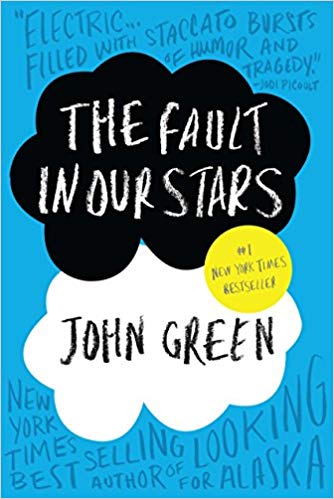
The Fault in Our Stars By: John Green —

The Fault in Our Stars By: John Green

THE FAULT IN OUR STARS BY JOHN GREEN

Bibliographic Information:

Author: John Green

Title: The Fault in Our Stars

Publisher: Penguin Books

Copyright: 2014

ISBN: 978-0142424179


Summary: Hazel Grace Lancaster isn’t your ordinary sixteen-year-old girl. At thirteen years old she was diagnosed with terminal thyroid cancer which spread into her lungs. Her life consists of going to cancer support meetings, occasionally hanging out with her friend Kaitlyn, and staying at home. The day she meets Augustus Waters, who also had cancer that caused him to lose one of his legs, at the cancer support group her life is forever changed. Through Augustus, Hazel learns that life can still be enjoyed despite her sickness. Her mindset prior to meeting him was that she doesn’t want to get too close to someone because she is going to end up leaving them when the time comes that she passes. But Augustus changes her life as she learns how to be happy every day, live in the moment and take chances. However, when Hazel learns that Augustus’s cancer is back, the shoe is finally on the other foot as she, for the first time in her life is forced to face the hard truth that she may lose the person that she loves before she passes away herself.


Critical Evaluation: The author does an amazing job of covering a topic that is often not discussed: teenagers with life threatening illnesses. The characters are very realistic. Hazel, who has terminal thyroid cancer, lives a very monotonous life: her life consists of going to cancer support meetings, occasionally hanging out with her friend Kaitlyn, and staying at home. This book gives a raw uncut look at what it is like for someone to have a life threatening illness. Over a year and a half ago, I lost someone that was close to me and he died at the age of twenty seven. By reading this book I was able to understand the inner thoughts and feelings of a young person who is ill, and understand why sometimes that person will distance themselves for seemingly “no reason”. There was in fact a reason even though the person who is ill may make sure that you never see it. This gave me an even greater understanding of his behavior towards the end, specifically him distancing himself. The author did an excellent job conveying Hazel’s thoughts on her own mortality, revealing that her putting up a wall not really to protect other people from hurt but to protect herself from being hurt, days when her health was especially bad, how she couldn’t worry about things “normal” teenagers do she had to constantly be mindful of her health”. I believe the author created Augustus to show that just because a person has a life-threatening illness doesn’t mean that is the end of their life; happiness is still possible. One thing that I did find odd was the manner in which Augustus spoke having such an extensive vocabulary as if he was a philosopher. Also, I didn’t care for the correspondence with Peter Van Houten frankly because I barely knew what was being said most of the time. His constant metaphors and talking in riddles was exhausting to try and decipher; it felt like I had to keep looking up words in dictionary.com just to understand a little letter! Otherwise it was a great story.


Reader’s Annotation: Hazel Grace Lancaster isn’t your ordinary sixteen year old girl; at thirteen years old she was diagnosed with terminal thyroid cancer which spread into her lungs. One day in a cancer support meeting she meets Augustus who changes her life forever.


Author Information:  John Green is an award winning #1 best-selling author. Some of his books that he is known for are: “Looking for Alaska” “An Abundance of Katherines”, “Paper Towns”, “Will Grayson”, and “The Fault in Our Stars”. Also some of the many awards that he has won include: a Printz Honor, the Printz medal, and the Edgar Award. While he didn’t win, he was nominated twice as a finalist for the LA Times Book prize. In addition to authoring his own books, he is also the coauthor with David Leviathan of “Will Grayson, Will Grayson”. In June 2014, “The Fault in Our Stars was made into a movie adaption”.

TIME magazine selected John as one of the Most Influential People in the world. Working together with his brother Hank, John is one half of Vlogbrothers. Also, John and Hanks videos on YouTube (from their vlogs) inspired a new community of people to develop who identify themselves as nerd fighters who fight for intellectualism. This community of nerd fighters have actually done a lot of great work including: raising millions of dollars to fight poverty. John and his brother Hank also launched a YouTube channel called Crash Course where they teach humanities, and science courses to their viewers.

http://www.johngreenbooks.com/bio

Genre– Fiction

Curriculum Ties– English

Book Talk Ideas– Illness

Reading Level Interest– Grades 9-12

Challenge Issues & Defense Preparation

Challenge Issue: Illness

Selection Policy: http://ccclib.org/policies/CollectionDevelopmentAccess-1999-11-16.pdf

Library Bill of Rights: http://www.ala.org/advocacy/sites/ala.org.advocacy/files/content/intfreedom/librarybill/lbor.pdf

Book Reviews: https://www.seattlepi.com/lifestyle/blogcritics/article/Book-Review-The-Fault-in-our-Stars-by-John-Green-5680393.php

https://www.amazon.com/Fault-Our-Stars-John-Green/product-reviews/014242417X/ref=cm_cr_dp_d_show_all_btm?ie=UTF8&reviewerType=all_reviews

Right to Read: http://www2.ncte.org/statement/righttoreadguideline/

Rationale:

Bibliographic information:

Author: John Green

Title: The Fault in Our Stars

Publisher: Penguin Books

Copyright: 2014

ISBN: 978-0142424179


Intended Audience: The intended audience is young adults specifically the upper grades of 9-12. This particular book would be beneficial for an English or social studies class. Primarily the book will be used for individual study in which every member of the class should read the book, and then afterwards there can be a group discussion of what transpired in the book as well as observations and thoughts concerning the book. “The Fault in Our Stars” can be utilized to start discussions concerning having an illness or how to deal with a loved one who is suffering from an illness.


Summary: Hazel Grace Lancaster isn’t your ordinary sixteen year old girl. At thirteen years old she was diagnosed with terminal thyroid cancer which spread into her lungs. Her life consists of going to cancer support meetings, occasionally hanging out with her friend Kaitlyn, and staying at home. The day she meets Augustus Waters, who also had cancer that caused him to lose one of his legs, at the cancer support group her life is forever changed. Through Augustus, Hazel learns that life can still be enjoyed despite her sickness. Her mindset prior to meeting him was that she doesn’t want to get too close to someone because she is going to end up leaving them when the time comes that she passes. But Augustus changes her life as she learns how to be happy every day, live in the moment and take chances. However, when Hazel learns that Augustus’s cancer is back, the shoe is finally on the other foot as she, for the first time in her life is forced to face the hard truth that she may lose the person that she loves before she passes away herself.

Relationship to Program:

The relationship of the book to school objectives would be helping 9th graders develop their literal and inferential understanding skills and comprehension skills. Through reading this book they would learn and develop the following skills: SLE #R. 9.9.2. Identify specific ways an author accomplishes purpose, including organization, narrative and persuasive techniques, style, literary forms or genre, portrayal of themes, tone and intended audiences; R.9.9.4 Recognize how works of a given period reflect author’s background, historical events, and cultural influences; and R.9.9.5 Draw inferences from a sentence or a paragraph (including conclusions, generalizations and predictions) and support them with text evidence. Concerning summary and generalization students will utilize R.9.9.8 Summarize and paraphrase structures in informational and literary texts, including relationships among concepts and details and R. 9.9.13 Identify and discuss a position using concepts gained from reading (e.g. debate, discussion, position paper, etc.).Concerning analysis and evaluation students will utilize R. 9.9.11  Recognize and define various points of view (e.g., omniscient narrator, third person limited). http://www.fayar.net/edvision/language/09_reading_0405.pdf

Impact: I believe this book would have a tremendous positive impact on the beliefs and attitudes of the readers. This book brings a lot of clarity and understanding concerning those who are suffering from a serious illness. It gives a more in-depth look at what a sick person thinks and feels, as well as why them may behave the way that they do. It readers can gain some understanding to what those who are suffering from a serious are going through than they can learn to be empathetic.


 Why Included: Students could really benefit from reading this book. It gives an in-depth look at what it is like for a young person to have a serious illness, which may give friends, brothers, sisters, significant others, other relatives or acquaintances a better understanding of life from the sick person’s perspective. This book may change the perspective of those who may feel that reading about a character with an illness is depressing because the book is actually very insightful. Also it has the underlying message that despite your circumstances it is important to live every day to the fullest.


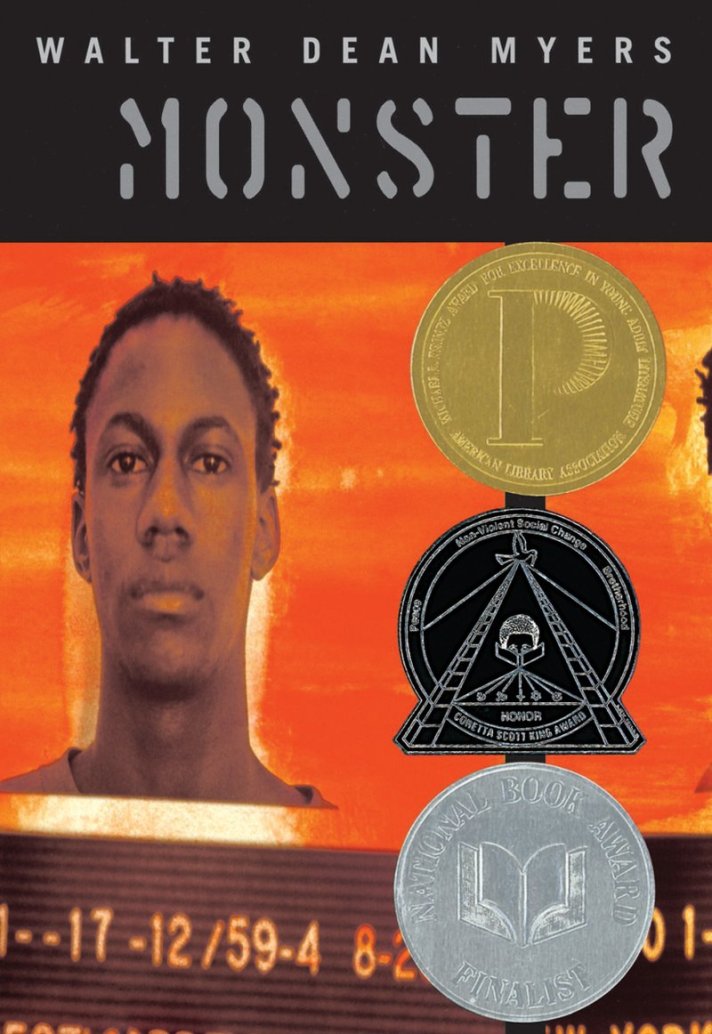
Monster By Walter Dean Myers —

Monster By Walter Dean Myers

MONSTER BY: WALTER DEAN MYERS

Bibliographic Information:

Author: Walter Dean Myers

Title: Monster

Publisher: Harper Collins

Copyright: 1999

ISBN: 9780064407311

Summary: This story focuses on the main character Steve Harmon, a sixteen year old from Harlem, who is on trial for murder. The situation seems simple: Steve and his codefendant James King went into a drugstore to steal money out of the cash register from the cashier which turns out to be the store owner. There was a struggle, in the midst of it one of the robbers tried taking the gun from the store owner, and the gun went off. As a result, the store owner was killed; the two robbers took the money and fled the scene. As the circumstances of the case are examined in greater detail, another suspect Richard “Bobo” Evans, who is already in prison on another charge, testifies confirming that King was his accomplice and Steve was a lookout for the robbery. But is that really what happened? Steve paints a different picture of the crime in which he didn’t assist in plan anything at all. There are three sides to every story: one side, the other side, and the truth. With a doubtful defense attorney, opposing testimonies, and everything to lose Steve struggles to tell his truth despite the odds.


Critical Evaluation: As a way to keep his mind occupied while awaiting trial, Steve starts writing a screenplay about his situation, telling the story of what happened from his perspective which is a unique feature of this book. Using script as a way to tell the story Steve becomes both the observer as well as a participant in the court case. The story is written in such a way that reader’s aren’t able to tell right away who exactly is telling the truth; even Steve struggles at times to figure out if he was guilty of being the lookout or not. The author forces the readers to be objective by presenting the facts and letting the readers be the jury. This is an extremely thought provoking story, and a large part of that is due to Steve being so complex. While he knows what he did and didn’t do, he constantly second guesses himself and his role in the incident. The author gives us an up-close glimpse of issues that young African American young men go through, being associated with the wrong people as well as being in the wrong place at the wrong time. Also the author’s portrayal of Steve proves that not every person that is deemed a criminal for their alleged actions is really in fact a monster; jails are filled with people who just simply associate with the wrong crowd and are in the wrong place at the wrong time.


Reader’s Annotation: As a sixteen-year-old, Steve Harmon should be doing teenage activities, like going to the mall, hanging out with friends, and doing homework, but instead he is on trial for being an accomplice to a murder. But did he really do it? You be the judge.


Author Information:Walter Dean Myers is an award winning African American author. Reading James Baldwin’s “Sonny’s Blues” inspired Myers to break into the writing scene. After briefly being in the army, he began to write seriously. He made it his personal mission to incorporate African Americans into stories since their characters and stories had been absent from books for so long.

Known as a prolific writer, Myers has won more awards than any other young adult author. “Monster” was the first winner of the Michael L Printz award, a New York Times bestseller, as well as a finalist in for the National Book Award. In 2009, he was selected to deliver the May Hill Arbuthnot Honor Lecture, which is an honor reserved for those specifically who have made important contributions to children’s literature. Myers received the Margaret A. Edwards award for lifetime achievement for his writings concerning young adults.

http://walterdeanmyers.net/about/

Genre: Fiction

Curriculum Ties: English

Book Talk: Incarcerated Youth

Reading/Interest Level: Grades 9-12

Challenge and Defense Preparation:

Challenge Issues: Justice System; Stereotypes of African American Young Men

Selection Policy: http://ccclib.org/policies/CollectionDevelopmentAccess-1999-11-16.pdf

Library Bill of Rights: http://www.ala.org/advocacy/sites/ala.org.advocacy/files/content/intfreedom/librarybill/lbor.pdf

Book Reviews: https://www.amazon.com/Monster-Walter-Dean-Myers/product-reviews/0064407314/ref=cm_cr_dp_d_show_all_btm?ie=UTF8&reviewerType=all_reviews

Right to Read: http://www2.ncte.org/statement/righttoreadguideline/

Rationale:

Bibliographic Information:

Author: Walter Dean Myers

Title: Monster

Publisher: Harper Collins

Copyright: 1999

ISBN: 9780064407311

Intended Audience: The intended audience is young adults specifically the upper grades of 9-12. This particular book would be beneficial for an English or social studies class. Primarily the book will be used for individual study in which every member of the class should read the book, and then afterwards there can be a group discussion of what transpired in the book as well as observations and thoughts concerning the book. “Monster” can be utilized to create talking points for incarcerated youth and the justice system.


Summary: This story focuses on the main character Steve Harmon, a sixteen year old from Harlem, who is on trial for murder. The situation seems simple: Steve and his codefendant James King went into a drugstore to steal money out of the cash register from the cashier which turns out to be the store owner. There was a struggle, in the midst of it one of the robbers tried taking the gun from the store owner, and the gun went off. As a result, the store owner was killed; the two robbers took the money and fled the scene. As the circumstances of the case are examined in greater detail, another suspect Richard “Bobo” Evans, who is already in prison on another charge, testifies confirming that King was his accomplice and Steve was a lookout for the robbery. But is that really what happened? Steve paints a different picture of the crime in which he didn’t assist in plan anything at all. There are three sides to every story: one side, the other side, and the truth. With a doubtful defense attorney, opposing testimonies, and everything to lose Steve struggles to tell his truth despite the odds.


Relationship to School Objective: The relationship of the book to school objectives would be helping 9th graders develop their literal and inferential understanding skills and comprehension skills. Through reading this book they would learn and develop the following skills: SLE #R. 9.9.2. Identify specific ways an author accomplishes purpose, including organization, narrative and persuasive techniques, style, literary forms or genre, portrayal of themes, tone and intended audiences; R.9.9.4 Recognize how works of a given period reflect author’s background, historical events, and cultural influences; and R.9.9.5 Draw inferences from a sentence or a paragraph (including conclusions, generalizations and predictions) and support them with text evidence. Concerning summary and generalization students will utilize R.9.9.8 Summarize and paraphrase structures in informational and literary texts, including relationships among concepts and details and  R. 9.9.13 Identify and discuss a position using concepts gained from reading (e.g. debate, discussion, position paper, etc.).Concerning analysis and evaluation students will utilize R. 9.9.11  Recognize and define various points of view (e.g., omniscient narrator, third person limited). http://www.fayar.net/edvision/language/09_reading_0405.pdf

Impact: I think this book has the potential to have a great impact on the students. Since the book is written in script, it forces the readers to observe rather than just make a decision prematurely without all the facts. This book provides a great example of how dangerous associating with the wrong people can be, and how being in the wrong place at the wrong time can definitely get a person into a lot of trouble. By making Steve such a complex character, it demonstrates to the students that just because someone is in jail concerning a crime “they committed” it doesn’t automatically mean that they are guilty or a monster.


Why Included: A lot of times when African American young men are sent to jail, they are often stereotyped by those that don’t know them well. Examples of how they are stereotyped include: assuming they come from bad homes, are troublemakers, are heartless, don’t care about the crime they committed, are scary, are mean and malicious. Sometimes the stereotype applies and sometimes it doesn’t. In this particular case Steve doesn’t fit the stereotype of African American men. I think it would be good for students to see that sometimes being associated or involved with the wrong crowd can have a huge negative impact on your life. Also, I would like for them to know that if they do find themselves in this type of situation then regardless of what anyone else thinks of them all that matters is their own opinion of themselves.


The First Part Last By Angela Johnson —

The First Part Last By Angela Johnson

THE FIRST PART LAST BY: ANGELA JOHNSON

Bibliographic Information:

Author: Angela Johnson

Title: The Last Part First

Publisher: Simon Pulse

Copyright: 2003

ISBN: 978-1442403437


Summary: Bobby is your average teenager, except for the fact that he is a teenage father. Over the course of the book, it flips back and forth between then (the past) and now (the present) as Bobby shares his story. Instead of hanging out with his friends, going to parties, and enjoying teenage activities, he is taking care of his newborn daughter Feather. Juggling school and home life while caring for Feather isn’t an easy task for Bobby. Nia, on the other hand isn’t excited to become a mother. However, upon giving birth to Feather, Nia slipped into a coma leaving Bobby to make one of the most important decisions of his life: keep Feather or put her up for adoption.


Critical Evaluation: This coming of age story provides a unique twist: teenage pregnancy from the male perspective. Usually pregnancy that is discussed concerning teens in books is usually discussed from a girl or women’s perspective. Using a male perspective really made the book more appealing and refreshing because it wasn’t a traditional way to discuss the topic, and it gives the reader a chance to look at what teenage fathers go through as they adjust to fatherhood. Also, the title reflects the order of the book which is pretty cool. When the book starts out Bobby is taking care of Feather and Nia isn’t mentioned in great detail until later on the book. I can appreciate the author not taking the cliché route by making Bobby be absent and Nia taking care of their newborn baby. As the book progresses it flips back and forth between past and present without warning which does create confusion for the reader. I had to constantly re read things to make sure I understood what was going on. However, it certainly was worth it to read the book to the end. This book definitely doesn’t promote teen pregnancy, instead it reveals the harsh truths that come with being a parent so young and the decisions that have to be made. This story is definitely thought provoking.


Reader’s Annotation: Sixteen year old Bobby’s life changes forever when he finds out that his girlfriend Nia is pregnant. He wants to do the right thing, but sometimes it is hard to do the right thing especially when you aren’t sure what the “right thing is”.


Author Information:

Angela Johnson is an award winning African American author that has written forty books. Her first book, which was a picture book, “Tell Me a Story Mama”, won the Ezra Jack Keats New Writer award in 1991. She has won Coretta Scott King awards for not only “The First Part Last”, but also for her other novels “Heaven” and “Toning the Sweep”. “The First Part Last” won the Michael L Printz award as well. Angela was named a MacArthur fellow in 2003, complete with a $500,000 grant which is specifically awarded to those who are exceptionally talented people in a variety of differ fields.

She has also written books for younger readers such as “When I Am Old with You”, which won the Coretta Scott King Honor Book Award. Other books include: “Wind Flyers”, “I Dream of Trains”, “Lottie Paris Lives Here”, and Lottie Paris and The Best Place. Additional picture books that she has written include “All Different Now”, “The Day Ray Got Away”, “Just Like Josh Gibson”. She lives in Ohio.

https://www.simonandschuster.com/authors/Angela-Johnson/1263944

Genre: Fiction

Curriculum Ties: English

Book Talk Ideas: Teen Pregnancy

Reading Level/Interest Level: 9-12

Challenge and Defense Preparation:

Selection Policy: http://ccclib.org/policies/CollectionDevelopmentAccess-1999-11-16.pdf

Library Bill of Rights: http://www.ala.org/advocacy/sites/ala.org.advocacy/files/content/intfreedom/librarybill/lbor.pdf

Book Reviews: https://www.amazon.com/First-Part-Last-Angela-Johnson/product-reviews/1442403438/ref=cm_cr_dp_d_show_all_btm?ie=UTF8&reviewerType=all_reviews

Right to Read: http://www2.ncte.org/statement/righttoreadguideline/

Rationale:

Bibliographic Information: Author: Angela Johnson

Title: The Last Part First

Publisher: Simon Pulse

Copyright: 2003

ISBN: 978-1442403437.

Intended Audience: The intended audience is young adults specifically the upper grades of 9-12. This particular book would be beneficial for an English or social studies class. Primarily the book will be used for individual study in which every member of the class should read the book, and then afterwards there can be a group discussion of what transpired in the book as well as observations and thoughts concerning the book. “The First Part Last” can be utilized to start talking points about teenage pregnancy as well as the harsh realities of being a young parent.

Summary: Bobby is your average teenager, except for the fact that he is a teenage father. Over the course of the book, it flips back and forth between then (the past) and now (the present) as Bobby shares his story. Instead of hanging out with his friends, going to parties, and enjoying teenage activities, he is taking care of his newborn daughter Feather. Juggling school and home life while caring for Feather isn’t an easy task for Bobby. Nia, on the other hand isn’t excited to become a mother. However, upon giving birth to Feather, Nia slipped into a coma leaving Bobby to make one of the most important decisions of his life: keep Feather or put her up for adoption.


Relationship to the school objectives: The relationship of the book to school objectives would be helping 9th graders develop their literal and inferential understanding skills and comprehension skills. Through reading this book they would learn SLE # R.9.9.1 Connect own background knowledge, including personal experience and perspectives shaped by age, gender, class or national origin, to determine author’s purpose. R.9.9.5. Draw inferences from a sentence or a paragraph (including conclusions, generalizations and predictions) and support them with text evidence. Concerning summary and generalization students will utilize R.9.9.8 Summarize and paraphrase structures in informational and literary texts, including relationships among concepts and details. Concerning analysis and evaluation students will utilize R. 9.9.11 Recognize and define various points of view (e.g., omniscient narrator, third person limited) and R. 9.9.13 Identify and discuss a position using concepts gained from reading (e.g. debate, discussion, position paper, etc.). http://www.fayar.net/edvision/language/09_reading_0405.pdf

Impact: I believe this book would have a great positive impact on the students. If they read the book then I think they would think twice about putting themselves in a position to become teenage parents. This book does reveal real decisions and situations associated with teenage parents. Especially since this book is told from a male perspective, I think more male students will find the book interesting especially since they would probably be able to identify with Bobby in some way.


Landscape with Invisible Hand By: M.T. Anderson —

Landscape with Invisible Hand By: M.T. Anderson

LANDSCAPE WITH INVISIBLE HAND BY M.T. ANDERSON

Landscape with Invisible Hand

Bibliographic Information:

Author: M.T. Anderson

Title: “Landscape with Invisible Hand”

Publisher: Candlewick Press

Copyright: 2017

ISBN: 9780763687892


Summary: In this story, aliens called the Vuvv invade the world; however, they come in peace, bringing with them higher level technologies and the ability to cure illnesses. Unfortunately, the world takes a turn for the worst when the Vuvv take over everything, making the human economy crash including jobs. With his mother out of work, and his father gone Adam needs a solution and fast. Because the vuvv appear to be obsessed with 1950s style “romance”, Chloe Adam’s girlfriend figures it would be easy money to participate in “hookups”( recording dates/interactions with boyfriends or girlfriends) to sell to the Vuvv to make some money. However, everything comes at a price, and what comes easy doesn’t always last. Will Adam and Chloe be able to make their “love” last forever?


Critical Evaluation: This story has quite a few unique features. Having the Vuvv invade the world and make humans completely dependent on them as well as forced to meet their demands and requirements was a very interesting part of the storyline. Adam, an aspiring artist, narrates the story as he tries to navigate this Vuvv world and help take care of his family. Making the main character Adam have a digestive disease was actually what made me like him and be interested in the story. Giving him this disease made him more realistic as well as added more depth to the character for me especially since I myself can relate to having digestive issues that often arise without warning. I appreciated that the author included this characteristic of Adam also because people often have medical conditions all the time that aren’t noticeable by just looking at them. Some people may feel that incorporating illness in the story made it depressing, but I disagree I just made the story more authentic. All the chapter titles were descriptions of paintings which were distracting. I was never really sure what the next chapter was going to be about so I had to ignore them eventually. The author’s use of the Vuvv’s obsession with 1950s romance is very similar to the constant displays of affection on social media in today’s society. It appears that the author has a few underlying messages including: money isn’t everything, money can’t buy happiness, you can always start over and everything isn’t always what it looks like despite the happy images portrayed. The ending wasn’t exactly a happy one, but it was very realistic which is what made it appeal to me.

Reader’s Annotation: Chloe and Adam have come up with a fool proof plan of recording their “love” to sell to the Vuvv to make money. But often what comes easy doesn’t last; can they make their “love” truly last forever?

Author Information:

As a teenager, M.T. Anderson had dreams of becoming a writer. Even in his teenage years he would write novels, stories, and ball point comics. One of his earlier works “The Game of Sunken Places” was actually published fifteen years after he first wrote the story. After graduating from high school, he applied for boarding school in England.

While he did attend college in the U.S, as a freshman, he dropped out. A few years later he went to Cambridge University in England and studied English literature; he graduated with his M.F.A. After graduating he went on to Writing for Children and Young Adults at Vernon College. In the midst of his interesting life, M. T. Anderson has written many books that have received awards.

http://mt-anderson.com/blog/about/

Genre: Fiction; Sci-Fi

Curriculum Ties: English; Social Studies

Book talk Ideas: Alien invasion

Reading/Interest level: Grades 9-12

Challenge and Defense Preparation:

Challenge Issues: Alien invasion; Social Media Perceptions; Illness

Selection Policy: http://ccclib.org/policies/CollectionDevelopmentAccess-1999-11-16.pdf


Library Bill of Rights:  http://www.ala.org/advocacy/sites/ala.org.advocacy/files/content/intfreedom/librarybill/lbor.pdf

Book reviews: https://www.amazon.com/Landscape-Invisible-Hand-M-Anderson-ebook/product-reviews/B071NL275M/ref=cm_cr_dp_d_show_all_btm?ie=UTF8&reviewerType=all_reviews

Right to Read: http://www2.ncte.org/statement/righttoreadguideline/

Rationale:

Bibliographic Information:

Author: M.T. Anderson

Title: “Landscape with Invisible Hand”

Publisher: Candlewick Press

Copyright: 2017

ISBN: 9780763687892

Intended Audience: The intended audience is young adults specifically the upper grades of 9-12. This particular book would be beneficial for an English or social studies class. Primarily the book will be used for individual study in which every member of the class should read the book, and then afterwards there can be a group discussion of what transpired in the book as well as observations and thoughts concerning the book. “Landscape with Invisible Hand” can be utilized to discuss social media perceptions, technology, and the concept of love that is portrayed publicly.

Summary: In this story, aliens called the Vuvv invade the world; however, they come in peace, bringing with them higher level technologies and the ability to cure illnesses. Unfortunately, the world takes a turn for the worst when the Vuvv take over everything, making the human economy crash including jobs. With his mother out of work, and his father gone Adam needs a solution and fast. Because the vuvv appear to be obsessed with 1950s style “romance”, Chloe Adam’s girlfriend figures it would be easy money to participate in “hookups”( recording dates/interactions with boyfriends or girlfriends) to sell to the Vuvv to make some money. However, everything comes at a price, and what comes easy doesn’t always last. Will Adam and Chloe be able to make their “love” last forever?

Relationship to Program: The relationship of the book to school objectives would be helping 9th graders develop their literal and inferential understanding skills and comprehension skills. Through reading this book they would learn and develop the following skills: SLE #R. 9.9.2. Identify specific ways an author accomplishes purpose, including organization, narrative and persuasive techniques, style, literary forms or genre, portrayal of themes, tone and intended audiences; R.9.9.4 Recognize how works of a given period reflect author’s background, historical events, and cultural influences; and R.9.9.5 Draw inferences from a sentence or a paragraph (including conclusions, generalizations and predictions) and support them with text evidence. Concerning summary and generalization students will utilize R.9.9.8 Summarize and paraphrase structures in informational and literary texts, including relationships among concepts and details and R. 9.9.13 Identify and discuss a position using concepts gained from reading (e.g. debate, discussion, position paper, etc.). Concerning analysis and evaluation students will utilize R. 9.9.11 Recognize and define various points of view (e.g., omniscient narrator, third person limited).

http://www.fayar.net/edvision/language/09_reading_0405.pdf

Impact: Of course, the main impact of the book is that it will open new perspectives to its readers. But in this book, it definitely gives the students subjects to think about concerning love, messages portrayed on social media, illness, and how money isn’t everything. It will force them to take a critical look especially at the images and messages on social media, and confirm the fact that not everything you see on there is real.

Why Included: Normally I don’t like sci-fi, I probably wouldn’t go out of my way to read anything that contained aliens in the storyline, but this was an interesting book. I like that the author makes the story real from the very beginning by making Adam have a digestive disease. This unique feature doesn’t make the story depressing, it just makes the story more authentic. Having parents out of work or disappear, having a high school relationship that doesn’t last, having a difficult relationship with a parent, entering a contest and not winning are all things that teens most likely experience more often then they care to admit. While all these scenarios are certainly unpleasant, that is just life and sometimes things don’t turn out the way we want them to. But the good news is as long as you are living, you can start over, and that is what I would want the students to get out of the story.


I See Reality: Twelve Short Stories About Real Life —

I See Reality: Twelve Short Stories About Real Life

I See Reality: Twelve Short Stories About Real Life

Bibliographic Information:

Authors: Jay Clark, Kristin Elizabeth Clark, Heather Demetrious, Stephen Emond, Patrick Flores-Scott, Faith Erin Hicks, Trisha Leaver, Kekla Magoon, Marcella Pixley, James Preller, Jason Schmidt, and Jordan Sonnenblick. Compiled by Grace Kendall

Title: “I See Reality: Twelve Short Stories About Real Life”

Publisher: Farrar Straus Giroux Books for Young Readers

Copyright:2016

ISBN: 9780374302580


Summary: This book contains twelve short stories about real life situations that teenagers sometimes may find themselves experiencing. There is definitely a story within this book that everyone can relate to in some way, shape, or form. Whether it is dealing with high school relationships and trying to figure out the best decision for you, coming out as gay or lesbian, grief, difficult conversations, domestic violence in the home, school shootings, coping with being a family member of a shooter (school shooting) illness, and more. Each story contains the underlying silent message, that you are not alone in what you may have experienced and there isn’t anything to be ashamed about.


Critical Evaluation: This book is compiled of twelve short stories centered around the tough issues and situations that teens experience in today’s society. Each story is different, and they each contain a variety of themes including: grief, joy, pain, love, high school relationships, coming out as gay, school shootings, and more. Laurie Halse Anderson offers a quote that is the perfect description of this book: “You can tell if a book is real when your heart beats faster. Real books make you sweat. Cry, if no one is looking. Real books tell it true, don’t hold back, and make you stronger”. This by Laurie’s definition is a real book. Even though this book has twelve stories in it, each story was so well written that each evoked a strong emotion out of me. Sometimes it was sadness, sometimes laughter, sometimes a deeper inside understanding, sometimes confusion, sometimes it really made me think as far as empathy and what would I do if I found myself in a particular situation etc. The reason that these stories were able to make me as a reader feel so many emotions is because it is written in a brutally honest fashion, exposing both harsh truths during difficult situations as well as taking a glimpse at thoughts, feelings, and situations, that are often not publically discussed due to their sensitive nature. Being able to both capture real situations as well as the teenagers’ perspectives as they try to navigate through these situations proves the books authenticity and accuracy. Openness and honesty were prevalent themes in each story.


Reader’s Annotation: Have you ever felt that you were the only one going through a tough time as a teen? This book contains twelve stories that will make you laugh, cry, think and everything in between; most of all this book confirms that we are never alone in our experiences whether they are good or bad.


Author Info: Jay Clark, who wrote “Coffee Chameleon”, is also a random blogger who lives in Columbus Ohio. He has also written “How to Stop Hating People in 15 Minutes”, “Finding Mr. Brightside”, and “The Edumacation of Jay Baker”. Kristin Elizabeth Clark, who wrote “The Downside of Fabulous” has worked as a child advocate within the justice system, and lives in northern California. Her book “Freakboy” was her first YA novel, which went on to receive three starred reviews and made it to ALA Rainbow Project Top Ten Best Fiction for Young Adults reading list. Heather Demetrios, who wrote “Three Imaginary Conversations with You”, is the founder of Live Your What, a project dedicated to creating writing opportunities for underserved youth. Stephen Emond, who wrote “The Night of the Living Creeper”, is the creator of the Emo Boy comic series. Patrick Flores- Scott, who wrote, “The Good Brother”, used to work as a public school teacher for a long time before he became a stay at home dad and writer in Ann Arbor Michigan.


Faith Erin Hicks, who wrote “Gone from This Place” has written many other books including “the Adventures of Superhero Girl”, The War at Ellsmere, and “Brain Camp”. Trisha Leaver, who wrote “Blackbird”, has also co-wrote the books “Creed”, “Sweet Madness”, and “Hardwire”. Kekla Magoon, who wrote “Makeshift”, is also a Vermont based writer, editor, speaker, and educator. Marcella Pixley, who wrote “Hush”, is a middle school language arts teacher whose poetry has been published in various literary journals. James Preller, who wrote “The Mistake” has written several other books including “Six innings”, “Bystander”, and “The Fall”. Jason Schmidt, who wrote “Things You Get Over, Things You Don’t”, has a law degree and lives with his family in Seattle, Washington. Jordan Sonnenblick, who wrote “The Sweeter the Sin”, is also the author of the “Dodger and Me” series.

https://www.amazon.com/See-Reality-Twelve-Short-Stories/dp/0374302588/ref=sr_1_1?ie=UTF8&qid=1544413215&sr=8-1&keywords=i+see+reality


Genre: Fiction

Curriculum Ties: Real Life Situations

Book Talk Ideas: Teens dealing with real life situations

Reading /Interest Level: Grade 9-12

Challenge and Defense Preparation:

Challenge Issues: Drugs; Grief; High School Relationships; Coming Out As Gay; School Shootings


Selection Policy: http://ccclib.org/policies/CollectionDevelopmentAccess-1999-11-16.pdf

Library Bill of Rights: http://www.ala.org/advocacy/sites/ala.org.advocacy/files/content/intfreedom/librarybill/lbor.pdf

Book Reviews : https://www.amazon.com/See-Reality-Twelve-Short-Stories-ebook/product-reviews/B0111JLUU2/ref=cm_cr_dp_d_show_all_btm?ie=UTF8&reviewerType=all_reviews

Right to Read: http://www2.ncte.org/statement/righttoreadguideline/


Rationale:

Bibliographic Information: Authors: Jay Clark, Kristin Elizabeth Clark, Heather Demetrious, Stephen Emond, Patrick Flores-Scott, Faith Erin Hicks, Trisha Leaver, Kekla Magoon, Marcella Pixley, James Preller, Jason Schmidt, and Jordan Sonnenblick. Compiled by Grace Kendall

Title: “I See Reality: Twelve Short Stories About Real Life”

Publisher: Farrar Straus Giroux Books for Young Readers

Copyright:2016

ISBN: 9780374302580

Intended Audience: The intended audience is young adults specifically the upper grades of 9-12. This particular book would be beneficial for an English or social studies class. Primarily the book will be used for individual study in which every member of the class should read the book, and then afterwards there can be a group discussion of what transpired in the book as well as observations and thoughts concerning the book. “I See Reality: Twelve Stories About Real Life” can be utilized as a way to open up a talk about different experiences that the students have gone through and how they can identify with the book.

Summary: This book contains twelve short stories about real life situations that teenagers sometimes may find themselves experiencing. There is definitely a story within this book that everyone can relate to in some way, shape, or form. Whether it is dealing with high school relationships and trying to figure out the best decision for you, coming out as gay or lesbian, grief, difficult conversations, domestic violence in the home, school shootings, coping with being a family member of a shooter (school shooting) illness, and more. Each story contains the underlying silent message, that you are not alone in what you may have experienced and there isn’t anything to be ashamed about.

Relationship to the Program: The relationship of the book to school objectives would be helping 9th graders develop their literal and inferential understanding skills and comprehension skills. Through reading this book they would learn SLE # R.9.9.1 Connect own background knowledge, including personal experience and perspectives shaped by age, gender, class or national origin, to determine author’s purpose. R.9.9.5. Draw inferences from a sentence or a paragraph (including conclusions, generalizations and predictions) and support them with text evidence. Concerning summary and generalization students will utilize R.9.9.8 Summarize and paraphrase structures in informational and literary texts, including relationships among concepts and details. Concerning analysis and evaluation students will utilize R. 9.9.11 Recognize and define various points of view (e.g., omniscient narrator, third person limited) and R. 9.9.13 Identify and discuss a position using concepts gained from reading (e.g. debate, discussion, position paper, etc.).

http://www.fayar.net/edvision/language/09_reading_0405.pdf

Impact of the book: This book certainly has the potential to change both student behavior and attitudes for the better. A lot of the issues that were covered in the book are things that teens experience every day in today’s society. By reading this book the students will be able to see that they aren’t alone. Also, they will learn that it is okay express your feelings concerning these matters, and healthy coping mechanisms can also be introduced in order to promote healing.

Why Included: I like that this book takes a huge risk and discusses many of the issues that we as a society try to sweep under the rug. Sometimes teens don’t discuss what is really going on with them because they are embarrassed, think someone will think badly of them if they hear their truth, or assume that no one will understand or care what they are going through. This book gives teens a voice by revealing the difficult things that may be taking place in their lives; it could even potentially inspire a teen to speak out about their issues as well as get some type of therapy.

All the Truth That’s in Me By Julie Berry —

All the Truth That’s in Me By Julie Berry

ALL THE TRUTH THAT’S IN ME BY JULIE BERRY

Bibliographic Information:

Author: Julie Berry

Title: All the Truth That’s in Me

Publisher: Penguin Group

Copyright: 2013

ISBN: 9780142427309

Summary: Four years ago, Judith and her best friend disappeared; no one in their village could find them. Two years later Judith resurfaces, with her tongue cut out, her world as she knew it has been turned upside down. Suddenly she is a social outcast forced to suffer in silence. However just because her tongue was cut out doesn’t mean that she doesn’t have anything to say; she has been holding in some dark secrets that desperately need to be revealed. Will she find the courage to speak even though it may change the life of the man she loves the most?

Critical Evaluation: Initially a few pages in I hated this book. It was so confusing to me, starting with the very first line: “You didn’t come” (who is “you”?), I didn’t get who Judith was talking to, and all these questions to this phantom person was starting to get annoying to be honest. Of course, now I know who she is “talking to”, but initially all the confusion instantly made me dislike the book. When I was able to look at the book from the perspective that she is writing a love letter to Lucas then I was able to understand and keep track of the book much better. The writing style took a while for me to get used to. I learned very quickly that I didn’t care for the second person narration.The writing style seems like some sort of verse novel or something along those lines. The detailed descriptions of the scenery and simple interactions seemed kind of long and drawn out. To me this was the author’s weakness. The long and drawn out unnecessary details were distracting me from figuring out what exactly was going on. This story is slower paced and the chapters are so short, almost like a few paragraphs if that. However, that is part of what makes the book unique. I didn’t like how the book jumps so suddenly from past to present without warning, at one point it was hard to figure out which is which until I figured out that the paragraphs where she was talking were the past and the present is when she is talking significantly less due to her tongue being cut out which is awful. It would seem like it would be so obvious to tell which is past and present, but at first it really wasn’t.

Reader’s Annotation: Judith has two choices: stay silent forever or speak her truth. Which one will she choose?

Author Information:

After having her fourth son, Julie Berry felt that it was time to devote her time to a dream of hers which was writing novels. She went back to school and received a M.F.A. in writing for children and young adults from Vermont College of Fine Arts. “All the Truth That’s in Me” was Julie Berry’s first YA novel. This book has won many awards such as: 2013 Horn Book Fanfare title, a School Library Journal Best of 2013 book, and a Kirkus Best Teen Read of 2013. It won a YALSA Best Fiction for Young Adults Award; was named a Junior Library Guild Selection, and will be published in fourteen countries.

Other books that she has written include: “The Amaranth Enchantment”, “Secondhand Charm”, “Splurch Academy for Disruptive Boys”, “The Scandalous Sisterhood of Prickwillow Place” “The Passion of Dolssa”, and “The Emperor’s Ostrich”. Many of her other books have won awards too. “Secondhand Charm”, “All the Truth That’s in Me”, and “Splurch Academy for Disruptive Boys series” was written with her sister Sally Faye Gardner who is the illustrator for these books as well. Julie says that for those that would like to know if she is working on another book the answer is always “yes”.

Genre: Historical Fiction

Curriculum Ties: English; History

Book Talk ideas: Women in colonial times

Reading/Interest Level: Grades 9-12

Challenge and Defense Preparation:

Challenge Issues: Violence/Mutilation

Selection Policy:

Library Bill of Rights:

Book Reviews:

Right to Read:

Rationale:


Bibliographic Citation:

Author: Julie Berry

Title: “All the Truth That’s in Me”

Publisher: Penguin Group

Copyright Date: 2013.

Intended Audience: The intended audience is young adults specifically the upper grades of 9-12. This particular book would be beneficial for an English or social studies class. Primarily the book will be used for individual study in which every member of the class should read the book, and then afterwards there can be a group discussion of what transpired in the book as well as observations and thoughts concerning the book. “All the Truth That’s in Me” can be utilized to discuss the time period as well as women’s roles and rights during this time.


Summary: Four years ago, Judith and her best friend disappeared; no one in their village could find them. Two years later Judith resurfaces, with her tongue cut out, her world as she knew it has been turned upside down. Suddenly she is a social outcast forced to suffer in silence. However just because her tongue was cut out doesn’t meant that she doesn’t have anything to say; she has been holding in some dark secrets that desperately need to be revealed. Will she find the courage to speak even though it may change the life of the man she loves the most?


Relationship to Program: The relationship of the book to school objectives would be helping 9th graders develop their literal and inferential understanding skills and comprehension skills. Through reading this book they would learn and develop the following skills: SLE #R. 9.9.2. Identify specific ways an author accomplishes purpose, including organization, narrative and persuasive techniques, style, literary forms or genre, portrayal of themes, tone and intended audiences; R.9.9.4 Recognize how works of a given period reflect author’s background, historical events, and cultural influences; and R.9.9.5 Draw inferences from a sentence or a paragraph (including conclusions, generalizations and predictions) and support them with text evidence. Concerning summary and generalization students will utilize R.9.9.8 Summarize and paraphrase structures in informational and literary texts, including relationships among concepts and details and R. 9.9.13 Identify and discuss a position using concepts gained from reading (e.g. debate, discussion, position paper, etc.). Concerning analysis and evaluation students will utilize R. 9.9.11 Recognize and define various points of view (e.g., omniscient narrator, third person limited).

Impact: Of course, the main impact of the book is that it will open new perspectives to its readers. This book can introduce the students to a time period that isn’t covered heavily in history text books. Also, this gives an up close look at what the women in that time period went through and how they were expected to behave. While the second person narration is sometimes difficult to understand, it forces the reader to pay attention to the details as much as possible since it isn’t always clear whether Judith is discussing the past or present. The students may very well like the different style of narration, and go on to look for books written in a similar style.


Why Included: This book certainly isn’t your average teen book. Written in a second person narration as well as discussing an often overlooked time period are the two main features that make this book unique. While the first initial pages may be difficult to get through, it really is a great book. This would be my “try something new” book for teens because its features definitely set it apart from other books. There is a very good chance that there aren’t a whole lot of books that are like this for teens so I’d want the teens to read it to be exposed to different writing styles and time periods.

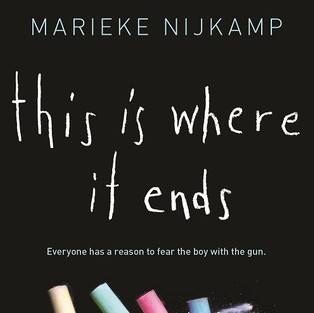
This is Where it Ends By Marieke Nijkamp —

This is Where it Ends By Marieke Nijkamp

THIS IS WHERE IT ENDS BY MARIEKE NIJKAMP

Bibliographic Info

Author: Marieke Nijkamp

Publisher: Sourcebooks Fire

Copyright: 2016

ISBN: 9781492622468

Summary: What was supposed to be just another normal beginning of the school year for the students of Opportunity High School quickly turned into a nightmare. Right after the principal gives her annual speech welcoming the students into the new semester, the unthinkable happens: the auditorium doors are locked and someone starts shooting. Four students, who all have some type of relationship to the shooter, fight to survive as they struggle to stay alive themselves as well as keep the other students from being killed also. Told from the perspectives of these four brave students, this story gives an up close look at what school shootings really look and feel like in today’s society.


Critical Evaluation: While the story starts off slow, it is overall a very fast paced story. One of the things that makes this story very unique is that it is told from the perspectives of four high school students. While this is such a unique feature of the book, it was very hard to follow the story line at first. I think that having a story told from four different perspectives in a way weakens the story because as a reader I’m constantly flipping between pages to remember who feels what about who and why. Four separate characters was a lot to follow, I’m sure if it was told in a first-person narrative I would easily be able to keep track of everyone way better. One minute one character is in one place at a designated time doing something, and the next few pages there is another character doing something completely different than the other character, talking to other characters, the time isn’t mentioned, and just as soon as you finally get a grasp of the character that you are reading about, it’s time to move on to another character. The characters themselves seemed to be very one dimensional. One thing I did think that the author did well was making the main characters interconnected, that was kind of an interesting twist. There is Tomas, Sylv, Claire, and Autumn:  Tomas is Sylvia’s brother, Claire dated Tyler (the shooter), and Autumn is Tyler’s sister. The connection to the characters were established towards the beginning and learning about the character’s relationships with the rest of the main characters was also intriguing. For example, Sylv had a strange encounter with Tyler (in a past event), who felt that Sylv was taking Autumn away from him, and how that situation really scared her especially with him threatening to kill her brother Tomas. The writing style seemed choppy and abrupt to me, but I do understand that it was specifically written this way to make the book unique. And it definitely did.


Reader’s Annotation: After the principal’s annual start of the semester speech, the unthinkable happened: a shooter is right in the auditorium! The fate of the rest of the student body rests upon four students in particular: Autumn, Sylv, Tomas, and Claire, will they be able to save the day?

Author Information:

“This is Where It Ends” is Marieke Nijkamp’s first book; this book turned her into a New York Times Best Selling author. In her very own article featured on the publishers weekly website, Marieke reveals that she loves writing about tragedy, and she naturally tends to gravitate more towards the intense subjects. Particularly she loves working with extremes when writing. Also she loves the concept of trying to find hope in darkness.


The idea for “This is where it Ends” came from Nijkamp having a conversation with a friend after a high profile school shooting. They particularly discussed both high school experiences as well as school safety also. Nijkamp specifically wanted to capture the stories of the students involved with the shooting. By writing from four different perspectives, she felt that she would be able to explore the topic better. Besides having a conversation, Nijkamp has also done extensive research on the subject of shootings including listening to 911 calls, reading investigative reports, and talking to real life victims.

Genre: Realistic fiction

Curriculum Ties: School Safety

Book Talk Ideas: Active shooter training; School safety

Reading level/ Interest Age: Grades 9-12

Challenge Issues and Defense Preparation: 

Challenge Issues: School Shootings; Violence

Selection Policy:

Library Bill of Rights:

Book Reviews:

Right to Read:

Rationale:

Bibliographic citation:

Author: Marieke Nijkamp

Book Title: This is Where It Ends;

Copyright: 2016

Publisher: Sourcebooks Fire

ISBN: 9781492622468


Intended Audience: The intended audience is young adults specifically the upper grades of 9-12. This particular book would be beneficial for an English or social studies class. Primarily the book will be used for individual study in which every member of the class should read the book, and then afterwards there can be a group discussion of what transpired in the book as well as observations and thoughts concerning the book. “This is Where It Ends” can be utilized to create talking points for the touchy subject of school shootings as well as active shooter training.


Summary: What was supposed to be just another normal beginning of the school year for the students of Opportunity High School quickly turned into a nightmare. Right after the principal gives her annual speech welcoming the students into the new semester, the unthinkable happens: the auditorium doors are locked and someone starts shooting. Four students, who all have some type of relationship to the shooter, fight to survive as they struggle to stay alive themselves as well as keep the other students from being killed also. Told from the perspectives of these four brave students, this story gives an up close look at what school shootings really look and feel like in today’s society.


Relationship to Program: The relationship of the book to school objectives would be helping 9th graders develop their literal and inferential understanding skills and comprehension skills. Through reading this book they would learn SLE # R.9.9.1 Connect own background knowledge, including personal experience and perspectives shaped by age, gender, class or national origin, to determine author’s purpose. R.9.9.5. Draw inferences from a sentence or a paragraph (including conclusions, generalizations and predictions) and support them with text evidence. Concerning summary and generalization students will utilize R.9.9.8 Summarize and paraphrase structures in informational and literary texts, including relationships among concepts and details. Concerning analysis and evaluation students will utilize R. 9.9.11  Recognize and define various points of view (e.g., omniscient narrator, third person limited) and R. 9.9.13 Identify and discuss a position using concepts gained from reading (e.g. debate, discussion, position paper, etc.).

Impact: Of course, the main impact of the book is that it will open new perspectives to its readers. For those who may not have experienced school shootings, this book can help those students have a better understanding of the experiences of real life victims and survivors. It can also create talking points for guidelines as to how to proceed in that kind of situation as well as introduce active shooter training. For those students who have experienced a school shooting, this book acknowledges that school shootings are in fact real, and gives them something to identify with as a coping mechanism.

Why included: While there are certainly mixed opinions about whether the book is bad or not, this book actually addresses the very real scenario of school shootings. All across the United States, innocent students fall victims to school shootings, these ideas for television episodes have now become our unfortunate reality. It doesn’t matter whether the reader likes the book or not. By reading this book the reader is acknowledging that this is a valid problem in today’s society, and the characters in the story could so easily be either yourself or someone you know. It definitely starts the conversation which could lead to positive resolutions such as an in-depth look at school safety procedures and active shooter training.

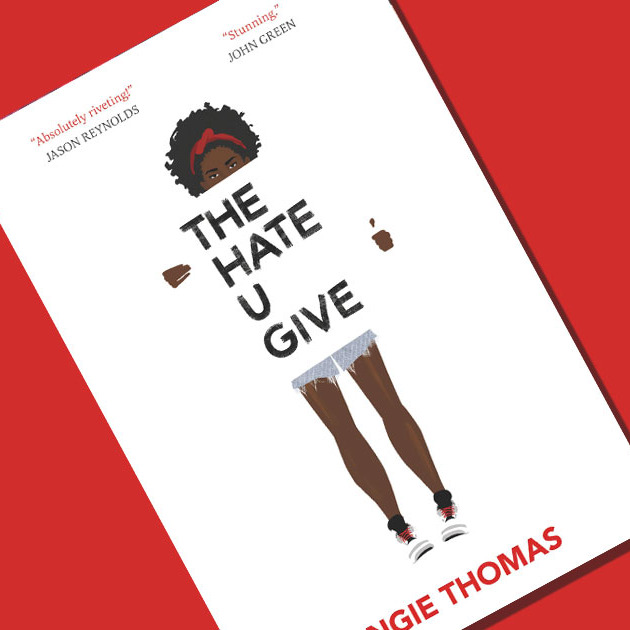
The Hate You Give By: Angie Thomas —

The Hate You Give By: Angie Thomas

THE HATE YOU GIVE BY ANGIE THOMAS

Bibliographic Info:

Author: Angie Thomas

Publisher: HarperCollins

Copyright date: 2017

ISBN: 978-0-06-249853-3

 Summary: Sixteen-year-old Starr Carter, is your average teenager only she finds herself caught between two very different worlds: the neighborhood that she lives in which is a poor black neighborhood, and her suburban prep school that is predominantly white. She is constantly struggling to find her where her identity fits between the two worlds. Similar to typical high school teenagers, she attends a local party, only the party ends abruptly when shots are fired. Luckily her childhood friend Khalil is there and they are able to reach his car and drive out of harm’s way. As they are driving, an officer flashes his lights and pulls them over, for a supposed broken taillight. However, the wrong move from Khalil unfortunately and surprisingly results in Khalil’s death. The only person who knows the truth about what happened besides the officer is Starr. Now she must make an important decision will she stay quiet or let the world know the truth?

Critical Evaluation: Angie Thomas touches on the delicate topics of driving while black and the harsh realities concerning African Americans and the police in such a way that really depicts these real situations without bias or stereotypes or generalizations of all police or people who happen to be white. One thing I love about the book is that it doesn’t bash any police officers despite the topic of police brutality being examined. There was never a point in time where the police were made out to be ALL classified as monsters. The characters were very well developed and the teenagers’ thoughts and feelings sounded very much like the teenagers of today without sounding cliché. The violence discussed in the book can’t really be considered inappropriate since the same violence unfortunately happens often in our society today. There are so many different situations in the book that make you as a reader stop and reevaluate your own thoughts, feelings, and actions concerning the deep topics that are discussed. Surprisingly, the book was very educational, educating those that weren’t familiar with the importance of the Black Lives Matter movement without it becoming overbearing or sounding like preaching. Thomas utilizes the rapper Tupac in a positive way and uses his acronym to shed light on what is going on in today’s society as well as the effect it has on youth.


Reader’s Annotation: Sixteen-year-old Starr witnesses a horrible tragedy when her childhood friend Khalil is shot by the police right in front of her during a routine traffic stop. She has to decide when and how to find her own voice to speak up for Khalil, herself, and her community.

Author Information:

Politics and Prose had Angie Thomas as a guest author to discuss her book in an interview, “The Hate U Give” and Rose Dawson who is the executive director of the Alexandria Library in Virginia interviewed her.  Angie discusses the themes, messages, and inspirations, of the book. This book was inspired by the Black Lives Matter movement, as well as the deaths of Oscar Grant, Trayvon Martin, Tamir Rice, and Sandra Bland. The title is discussed in detail as part of the acronym for thug which comes from late rapper Tupac Shakur’s tattoo “thug life” which was an acronym for: the hate you give little infants f***s everybody. Angie goes on to explain Tupac’s philosophy behind the acronym which was: what society feeds into youth has a way of affecting everyone. This interview is a great resource because it sheds light on themes, concepts, situations, and underlying messages that the reader may or may not have picked up on.

Angie mentions how her biggest influence in writing this book was Tupac. Tupac had songs that made people think, laugh, cry, etc., and she wanted to be able to do the same thing in her writing. Angie reveals her reasoning behind including so much humor in the book which is that: in the midst of sadness we have to find joy because that is how we can honor those that have passed away. We can’t honor our loved ones that have passed away by being sad all the time; it is important that we are able to find light in darkness.

Genre: Fiction

Curriculum Ties: Black Lives Matter Movement

Book Talking Ideas: Racism; Racial profiling

Reading Level/Interest Age: Grades 9-12

Challenge Issue and Defense Preparation: This book definitely covers the sensitive topics of driving while black and racial profiling as well as touches on the black lives matter movement.

Selection Policy:

Library Bill of Rights:

Book Reviews:

Right to Read:Guidelines for Driving While Black:

Rationale:

Bibliographic Information: Author: Angie Thomas

Publisher: HarperCollins

Copyright date: 2017

ISBN: 978-0-06-249853-3


Intended Audience: The intended audience is young adults specifically the upper grades of 9-12. This particular book would be beneficial for an English or social studies class. Primarily the book will be used for individual study in which every member of the class should read the book, and then afterwards there can be a group discussion of what transpired in the book as well as observations and thoughts concerning the book. “The Hate You Give” can be utilized to discuss the injustices that police have a history of inflicting upon African Americans as well as strategies concerning how to handle those situations properly.


Summary: Sixteen-year-old Starr Carter, is your average teenager only she finds herself caught between two very different worlds: the neighborhood that she lives in which is a poor black neighborhood, and her suburban prep school that is predominantly white. She is constantly struggling to find her where her identity fits between the two worlds. Similar to typical high school teenagers, she attends a local party, only the party ends abruptly when shots are fired. Luckily her childhood friend Khalil is there and they are able to reach his car and drive out of harm’s way. As they are driving, an officer flashes his lights and pulls them over, for a supposed broken taillight. However, the wrong move from Khalil unfortunately and surprisingly results in Khalil’s death. The only person who knows the truth about what happened besides the officer is Starr. Now she must make an important decision will she stay quiet or let the world know the truth?


Relationship to Program: The relationship of the book to school objectives would be helping 9th graders develop their literal and inferential understanding skills and comprehension skills. Through reading this book they would learn SLE # R.9.9.1 Connect own background knowledge, including personal experience and perspectives shaped by age, gender, class or national origin, to determine author’s purpose. R.9.9.5. Draw inferences from a sentence or a paragraph (including conclusions, generalizations and predictions) and support them with text evidence. Concerning summary and generalization students will utilize R.9.9.8 Summarize and paraphrase structures in informational and literary texts, including relationships among concepts and details. Concerning analysis and evaluation students will utilize R. 9.9.11 Recognize and define various points of view (e.g., omniscient narrator, third person limited) and R. 9.9.13 Identify and discuss a position using concepts gained from reading (e.g. debate, discussion, position paper, etc.).

Impact: I think this book would have a positive impact upon the beliefs and perspectives of the students. This book emphasizes the importance of speaking up for yourself as well as telling the truth. Students will be able to see that their voice is their own power. One of the underlying messages of this book is that sometimes the right thing to do is also the hardest thing to do.

Why Included: This is an extremely powerful book with a powerful message. Angie tells the story of an African American boy getting shot and killed by the police from an interesting perspective: the friend of the victim. She gives an inside glimpse as to what it is like for the victim’s friend following the death of the victim and the trials and tribulations that arise as they try to make their own peace with the situation. I’m sure so many teens and people in general can relate to this situation as there has been a lot of cases of African American women and men losing their lives at the hands of police especially in the last ten years.


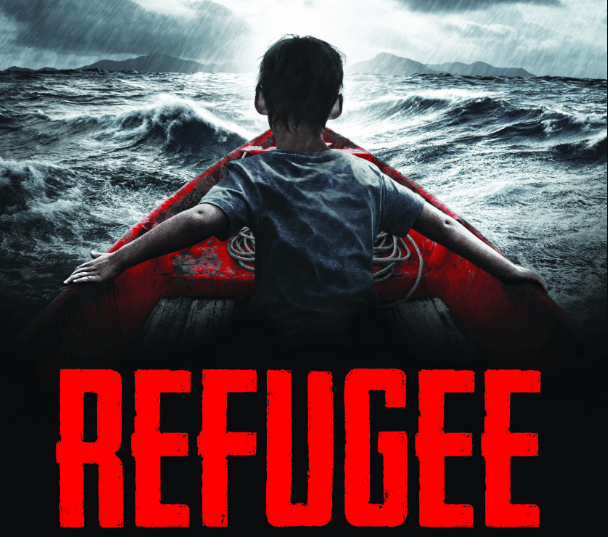
Refugee By Alan Gratz —

Refugee By Alan Gratz


REFUGEE BY ALAN GRATZ

Bibliographic Info:

Author- Alan Gratz

Publisher-Scholastic Press

Copyright Date:2017

ISBN: 978-0-545-88083-1

Summary: Three different kids, three different time periods, and three different backgrounds. One thing all three of these characters have in common is that they are on a mission to escape their current situations. Josef is a Jewish boy living in 1930s Nazi Germany, whose life changes forever the moment he boards a ship in search of a better life with his family. Isabel, a Cuban teen in 1994, steps out on a leap of faith with her family and neighbors to try to escape Cuba and make the long difficult journey by water to America. Mahmoud, a Syrian boy in 2015, tries to escape the violence and terror going on in Syria with his family as they set out on the long journey to go to Europe. As each character begins their journey they are faced with unexpected trials and tribulations that would discourage anyone; however, giving up isn’t an option.


Critical Evaluation: This story is written in such a way that it is easy to read. Modern day language that is appropriate for each of the various time periods were used throughout the stories. This style of writing can be described as action packed; similar to the thriller genre; many of the chapters end with unique cliff hangers, leaving you eagerly wanting to find out what happens next. Even though it may seem like the three stories are separate, there are a lot of connections between the characters, who are very well developed. Sometimes I wish the historical details that were provided were expanded upon such as modern issues relating to modern day refugees, and a little more on Josef and his mother after the decision was made for Ruthie to go free. This is a great work of realistic fiction, and there were some parts that made me want to cry, like when Isabel’s grandfather sacrificed his own freedom for the safety and well-being of his family. An ongoing theme in the book appears to be that though these are children they have to take charge of their situations in order to maintain their survival as well as their families’. To be so young, all of them seem to be wise beyond their years as they step up as leaders within their families.


Reader’s Annotation: Three kids, three stories, three time periods, all in search of the one thing their homelands can’t provide: safety and security. Will they escape their oppressions or suffer their inevitable fates?


Author Info:

Many of Alan Gratz’s books are centered around the topic of history. In the Author Interview with Alan Gratz, Gratz discusses how he likes to, in his books, take things that really happened and drop a fictional character in the story, into real things that happened so that he can have a protagonist that has a real beginning, middle, and end to their stories and at the same time have the real events of history playing out. He also said that he looks for untold stories in history, which I can now after reading Refugee, appreciate because it enlightened me on other experiences of Nazi Germany during the 1930s, the war in Syria, and what it was like to live in Cuba in 1994.


A large part of the reason that Gratz integrates history into his stories is because he loves not only history but research as well. He loves real stories too. Also in the interview, he discusses how he tries to put himself in the time and place of the characters as well as tries to see things from the characters’ perspectives. Especially in his historical stories. One of the things that he stresses in this interview is that he tries to make sure that his characters aren’t modern characters making modern decisions.

. Genre: Realistic Fiction

Curriculum Ties: History

Book Talk Ideas:  Jews in Nazi Germany; War in Syria

Reading Level/Interest Age: Grades 6-8 and 9-12


Challenge Issues and Defense Preparation: There are some topics that are covered in the book that could be considered sensitive areas such as: guns, racial taunts, discrimination, harsh realities of war, and violence.

Selection Policy:

Library Bill of Rights:

Book Reviews: 

Right to Read:

Rationale:


Bibliographic Information:

Author- Alan Gratz

Publisher-Scholastic Press

Copyright Date:2017

ISBN: 978-0-545-88083-1


Intended Audience: The intended audience is young adults specifically the upper grades of 9-12. This particular book would be beneficial for an English or social studies class. Primarily the book will be used for individual study in which every member of the class should read the book, and then afterwards there can be a group discussion of what transpired in the book as well as observations and thoughts concerning the book. “Refugee” can be utilized to start discussions concerning the war in Syria, Nazi Germany, and Cuba during 1994.


Summary:  Three different kids, three different time periods, and three different backgrounds. One thing all three of these characters have in common is that they are on a mission to escape their current situations. Josef is a Jewish boy living in 1930s Nazi Germany, whose life changes forever the moment he boards a ship in search of a better life with his family. Isabel, a Cuban teen in 1994, steps out on a leap of faith with her family and neighbors to try to escape Cuba and make the long difficult journey by water to America. Mahmoud, a Syrian boy in 2015, tries to escape the violence and terror going on in Syria with his family as they set out on the long journey to go to Europe. As each character begins their journey they are faced with unexpected trials and tribulations that would discourage anyone; however, giving up isn’t an option.


Relationship to Program: The relationship of the book to school objectives would be helping 9th graders develop their literal and inferential understanding skills and comprehension skills. Through reading this book they would learn SLE # R.9.9.1 Connect own background knowledge, including personal experience and perspectives shaped by age, gender, class or national origin, to determine author’s purpose. R.9.9.5. Draw inferences from a sentence or a paragraph (including conclusions, generalizations and predictions) and support them with text evidence. Concerning summary and generalization students will utilize R.9.9.8 Summarize and paraphrase structures in informational and literary texts, including relationships among concepts and details. Concerning analysis and evaluation students will utilize R. 9.9.11 Recognize and define various points of view (e.g., omniscient narrator, third person limited) and R. 9.9.13 Identify and discuss a position using concepts gained from reading (e.g. debate, discussion, position paper, etc.).

Impact: I believe that the book Refugee would have a positive impact on the attitudes and perspectives of the students. It would teach them to appreciate what they have since things could always be worse such as the scenarios in the book. Also, it would teach them that no matter what age you are, you can still be a leader. Even though the book has a lot of sad parts, it does have the underlying message of never giving up hope for a better tomorrow no matter what your current circumstances may be.


Why Included: This book was the first book required to read on the class reading list; at first when I started out reading this book, I didn’t know what to expect and just assumed it would be boring to read. I was very wrong. Alan Gratz does a great job of writing three interesting and captivating stories rooted in the untold stories that often get lost in history. I loved how Gratz provided so much historical content of what was occurring in each time period while taking the reader through each of the character’s journeys. After reading the book, I felt enlightened about the real-life struggles of Jews trying to flee Nazi Germany, Cubans leaving Cuba in 1994, and I didn’t even know about the war going on in Syria in 2015 so that was a big eye opener.


Design a site like this with WordPress.com
Get started